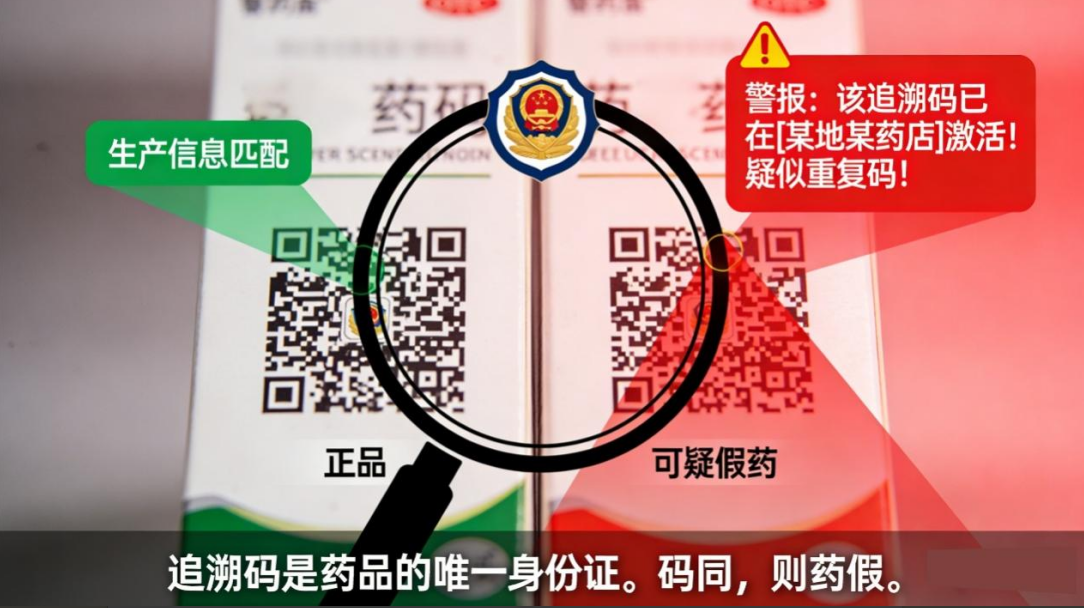
The core value of drug traceability codes lies in establishing a transparent and trustworthy full-process supervision system, thereby achieving:
• Combating "recycled drugs" to safeguard healthcare funds
"Recycled drugs" refer to medications purchased with healthcare funds by illegal actors and then resold on the market. The National Healthcare Security Administration has explicitly stated that each drug traceability code should only have one sales record. If the same traceability code is scanned multiple times for settlement, it highly suggests the drug is "recycled" or involved in "substitution" sales (e.g., pharmacies charging healthcare cards for medicines but giving customers daily necessities instead). Through traceability code big data, healthcare authorities can precisely crack down on such fraudulent activities, protecting the public’s "life-saving money."
• Blocking counterfeit and substandard drugs to ensure quality control
If different drug packages share the same traceability code, they are highly likely to be counterfeit. The traceability code acts as a "anti-counterfeiting label" for drugs, helping consumers and businesses verify authenticity and maintain market order.
• Achieve precise recall and strictly control safety risks
Once a batch of drugs has quality issues, the traceability code system can quickly locate the drug flow and achieve precise recall, reducing potential harm.